Resources
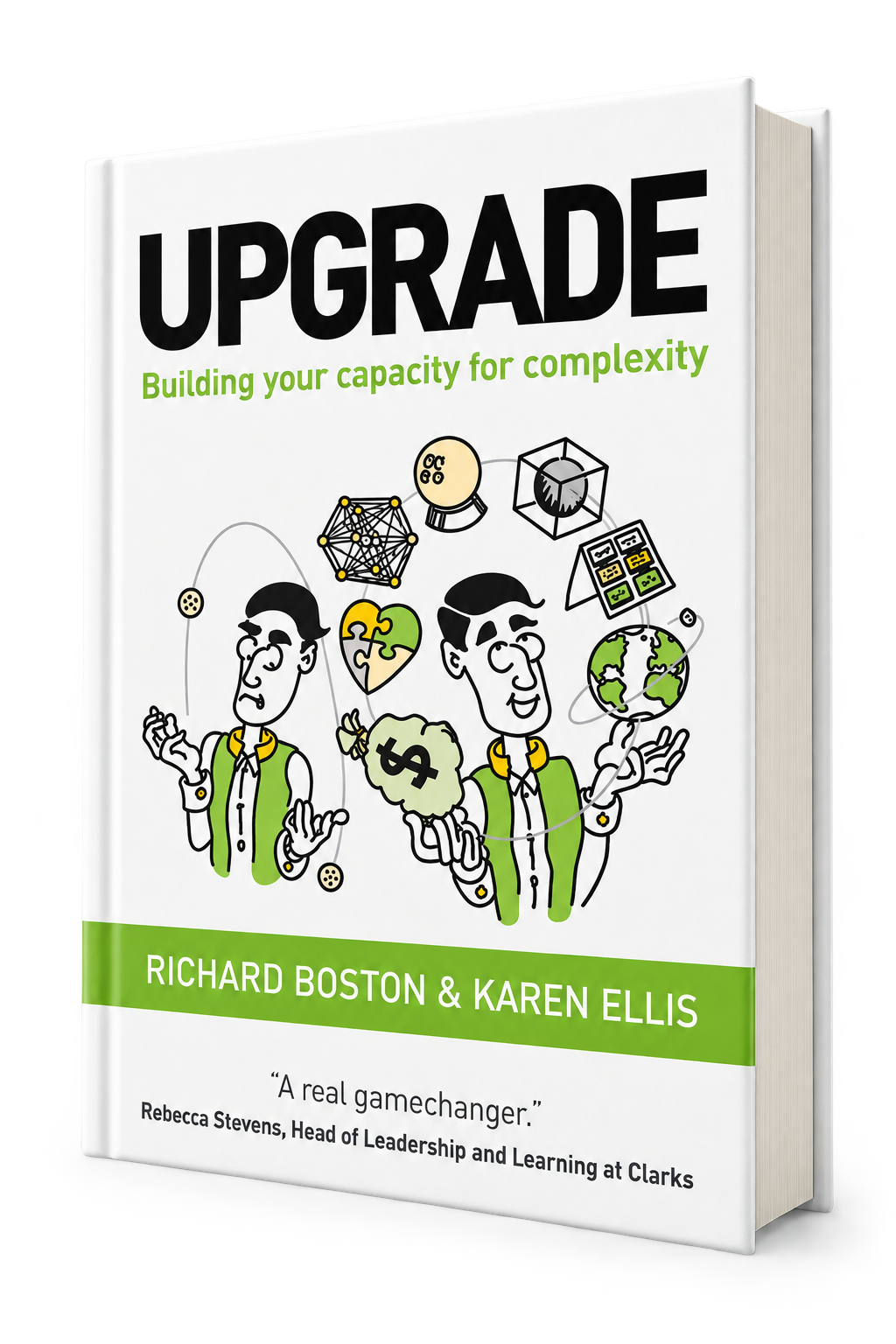
Thank you for purchasing UPGRADE, by Richard Boston and Karen Ellis.
These resources are designed to support you as you read the book. If you’d like more, please contact us with your suggestions.
Article: Opposable thinking in an opposable world
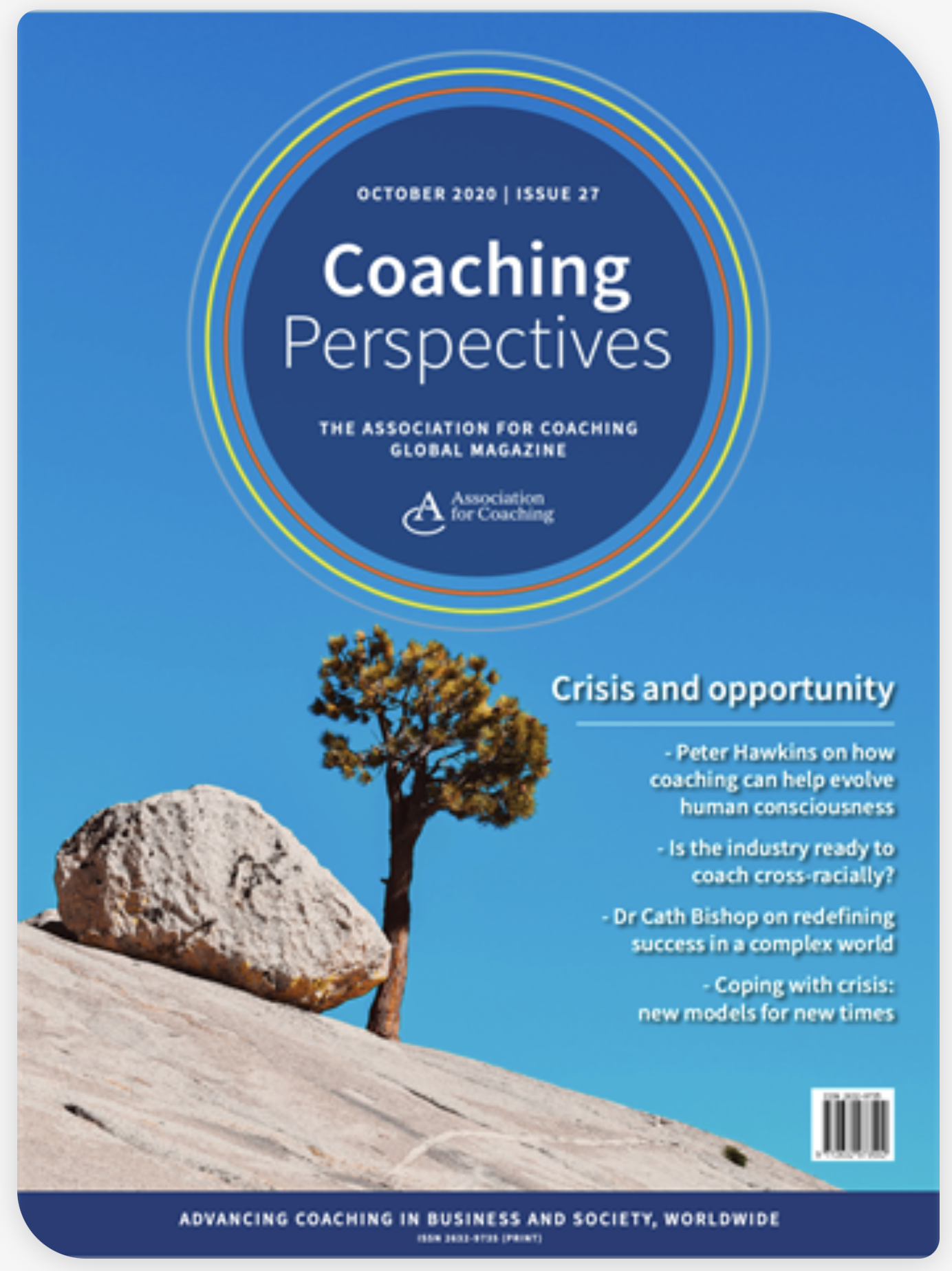
Our piece in Coaching Perspectives
In a world that’s ever-more polarised, Karen Ellis and Richard Boston encourage us to develop our capacity for opposable thinking to better navigate the tensions of a complex world.
Article: Sometimes we hate it when people show empathy
Implications for Perspective-shifting and Opposable Thinking
The Psychologist magazine highlights research suggesting that many of us dislike it when those around us empathise with people whose views are opposed to ours – an interaction between our capacity for Opposable Thinking and Perspective-shifting. We reckon this effect will be more common in people operating at Levels 1 and 2 in those capacities than in people at Levels 3 and 4.

Article: Are you ‘reasoning’ as well as you need to be?
What it means to upgrade our approach to problem solving
This is an article aimed primarily at people at Levels 3 and 4 in one or more of the four capacities. It pulls the four capacities together and explores what it looks like to ‘level up’ our ability to deal with complex problems. It’s hosted on LinkedIn, but you don’t need an account to read it.

Article: Whose values are they anyway?
Upgrading your Self-relating capacity
On World Values Day, Richard and Karen asked us all to take a deeper look at our personal values, their origins and the darkness that can lurk within even the most positive intent.
In doing so, they’re encouraging us to examine their values more deeply, not abandon them or water them down. For most of us, values are at the heart of being authentic. Richard and Karen are asking us to upgrade that authenticity, by upgrading our capacity for Self-relating. In doing so, we’re moving from the values we inherited from others to the values we choose for ourselves.

Article: Does your coaching client need an upgrade?
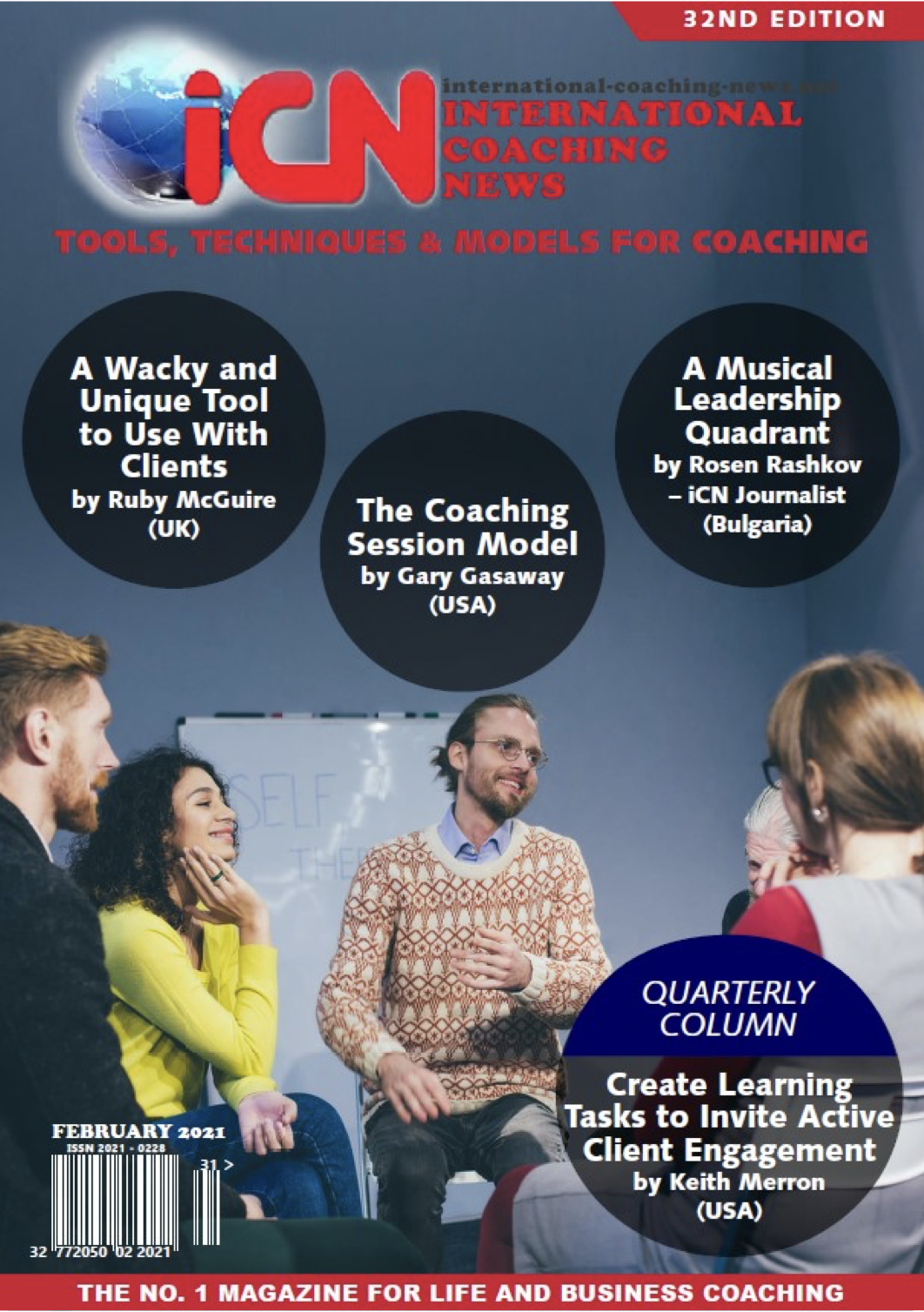
Our piece in International Coaching News
Most coaches find their clients are facing increasing amounts of change, complexity, uncertainty and ambiguity. What if there was a simple but highly effective way to help us all – clients and coaches alike – to ‘upgrade’ our capacity to deal with all that complexity? In this article, Richard shows fellow coaches how to use the four capacities at the heart of Upgrade to enhance their coaching practice – whether they’ve read the book itself, or not.
Article: Why the political cliff-edge is kind of inevitable?
Opposable Thinking in action
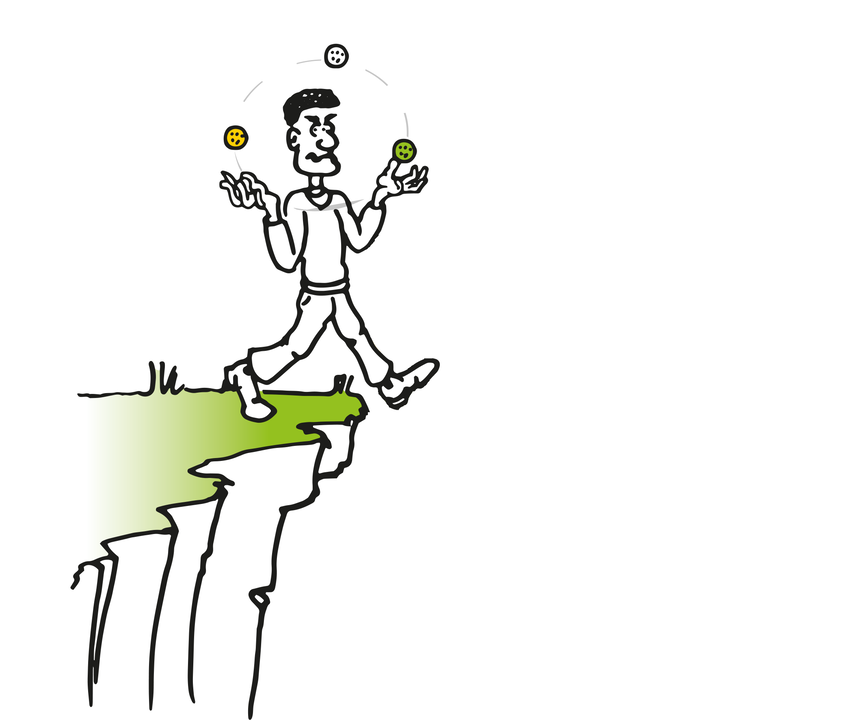
Leaders who change their stance on supposedly moral issues are seen not as brave, but as hypocritical and ineffective – so says the psychological research on this topic. Could that be why so many leaders who appear to be taking us to a precipice seem unable to back down – even when it’s clear that their initial position proves untenable, divisive or out-of-step with emergent data?
We’re not all politicians, but the challenges we face as leaders are rarely simple. They’re challenges that mean changing behaviours and attitudes, and can stoke up heated emotions. Isn’t is worrying, then, that if changing our minds will probably be seen as a bad thing? What if the decisions we made early on are no longer relevant, or demonstrably wrong?
Richard offers two lenses to help navigate this complex challenge. One is the three ARC qualities from ARC Leadership – authentic, responsible and courageous. The other is the Opposable Thinking capacity from Upgrade.
Article: Polarisation, post-covid
Three ‘recovery’ conflicts that threaten to drive us apart
As nations emerged from the first wave of covid-19, Richard shared the three polarities he believed would be the biggest threat during people’s emergence from a global pandemic.

Chapter 8: capacity profile sheet
What’s your current ‘OS’?
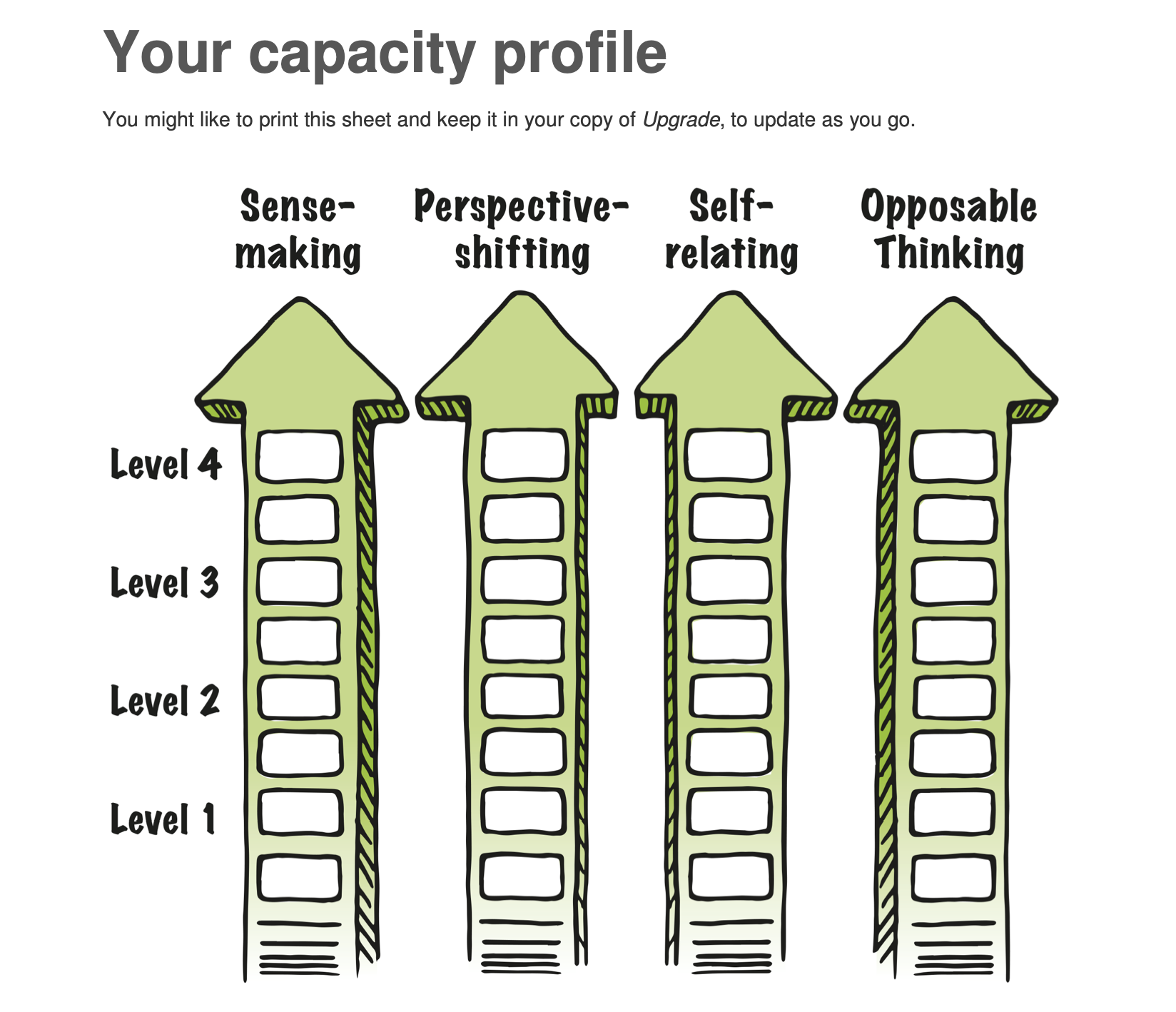
A copy of the capacity profile on page 195 of Upgrade. Designed for you to print and fold into your paperback copy of the book, if you have one, or to use alongside the eBook. Mark the level at which you believe you’re currently operating in each of the four capacities.
Chapter 10: ‘Upgrade’ development plan
Helping you plan and keep track of your development
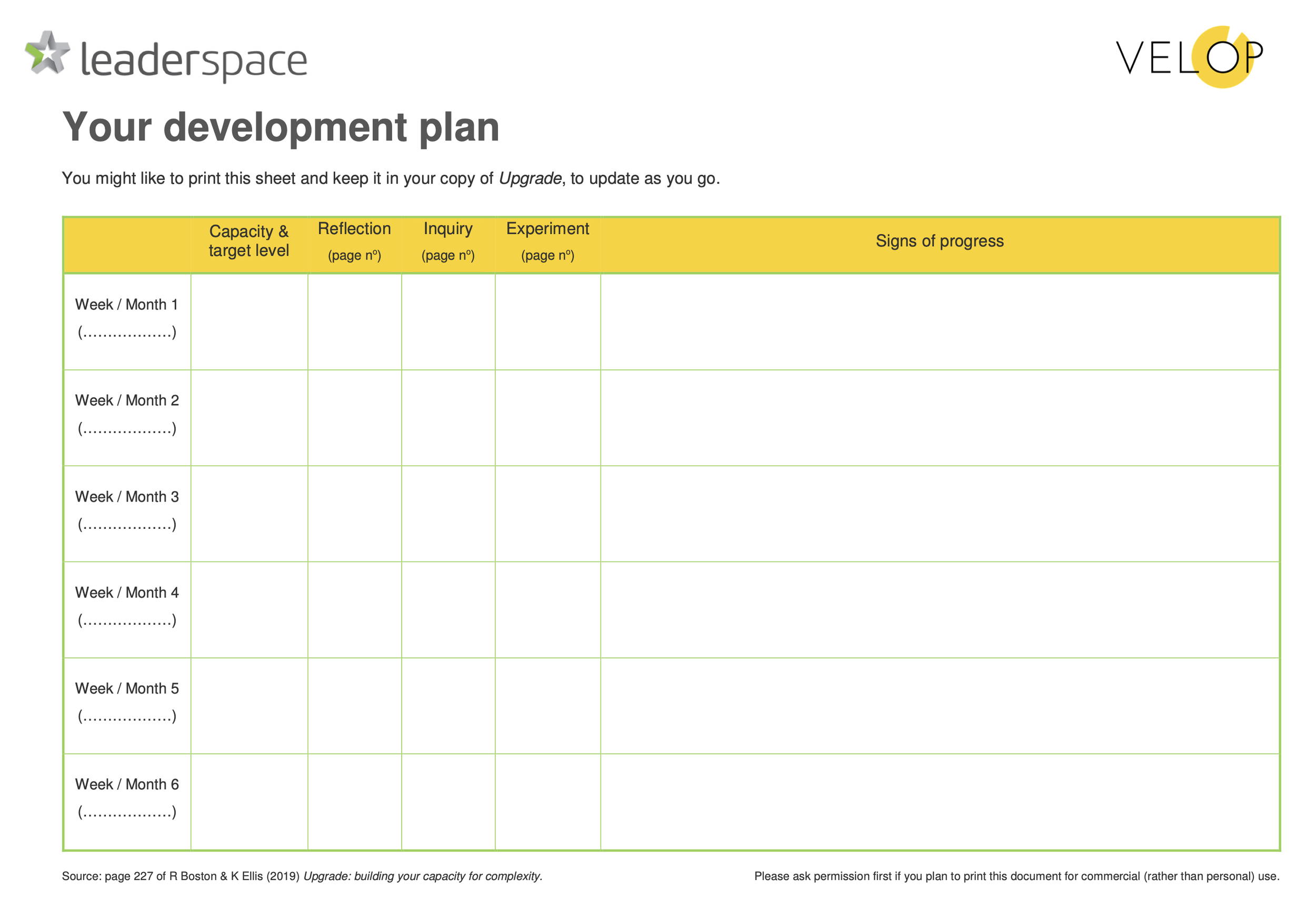
A copy of the table on page 227 of Upgrade. The intention is for you decide which upgrade(s) to work on, then plan and monitor your use of the relevant practices. Decide which Reflections, Inquiries and Experiments to do, and when, then capture the impact of the work you’re doing. Upgrading isn’t easy, so we recommend repeating the practices, rather than just doing each of them once.
Lesson 3 & 8: using ‘ARC’ to help you Upgrade
Leveraging Richard’s previous book to progress in the four capacities
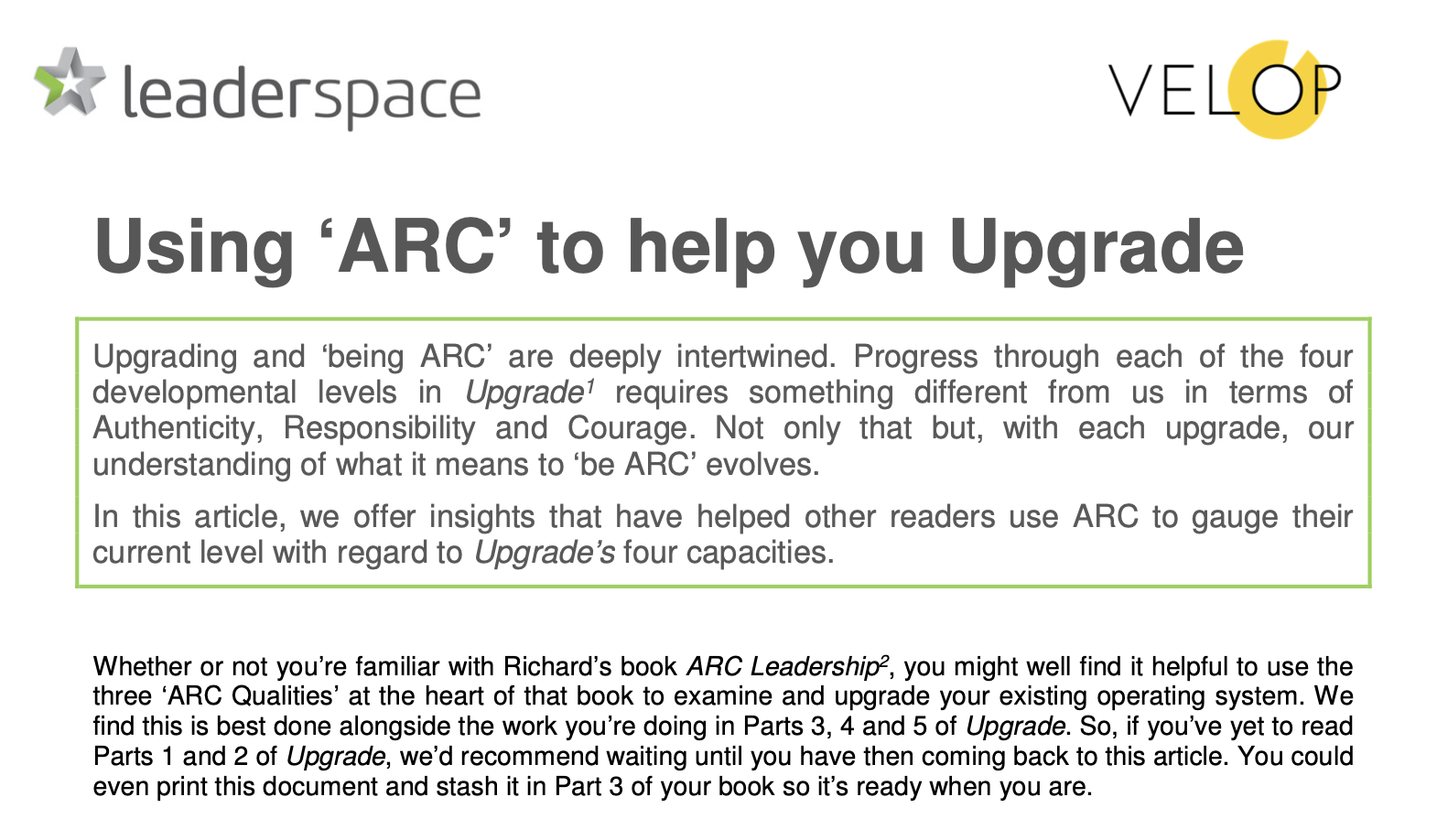
As promised in Chapter 3, this article looks at the links between the developmental levels in the Upgrade‘s four capacities and the three qualities at the heart of ARC Leadership: authenticity, responsibility and courage. With each upgrade, our experience of the three ARC Qualities evolves, as does the nature of the challenges we face in trying to ‘be ARC’, whether that’s in a leadership context or in life in general.
The article is best read alongside Chapters 8, 10, 12 or 16 – whenever you feel you have the appetite for another way of looking at your current OS and your chosen upgrade(s). It requires no prior knowledge of ARC Leadership.
Links between Upgrade and Richard’s other work
Upgrade… ARC… The Boss Factor… Habits, Needs and Mind-sets
Early drafts of Upgrade made clearer links between its four capacities and Richard Boston’s other work than did the final, published version of the book. He and his co-author Karen Ellis had so much material, though, that they chose to make Upgrade a stand-alone book.
In this interview, we explore with Richard both the obvious links and the less obvious ones. Our intention is to help you see, from his perspective, how this evolving body of work hangs
together. Some might approach that question from a purely theoretical perspective; others because of its practical implications for their own development and the development of their people.
You’re likely to find this interview most useful and interesting if you’ve at least a passing acquaintance with Richard’s other work. That might be from attending a LeaderSpace programme, receiving individual or team coaching from us, or reading one or more of Richard’s books.